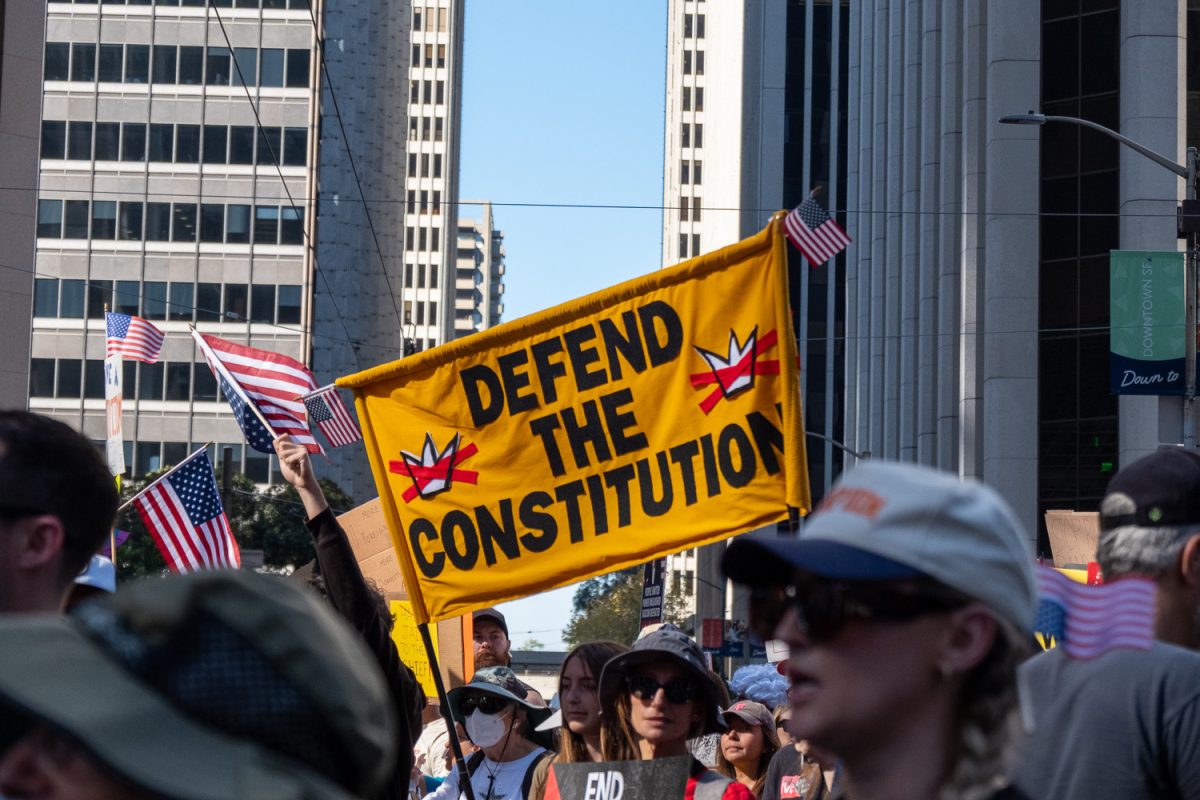

U.S. District Judge Charles Breyer ruled last week that it was illegal for President Donald Trump to unleash the National Guard on Los Angeles anti-deportation protestors.
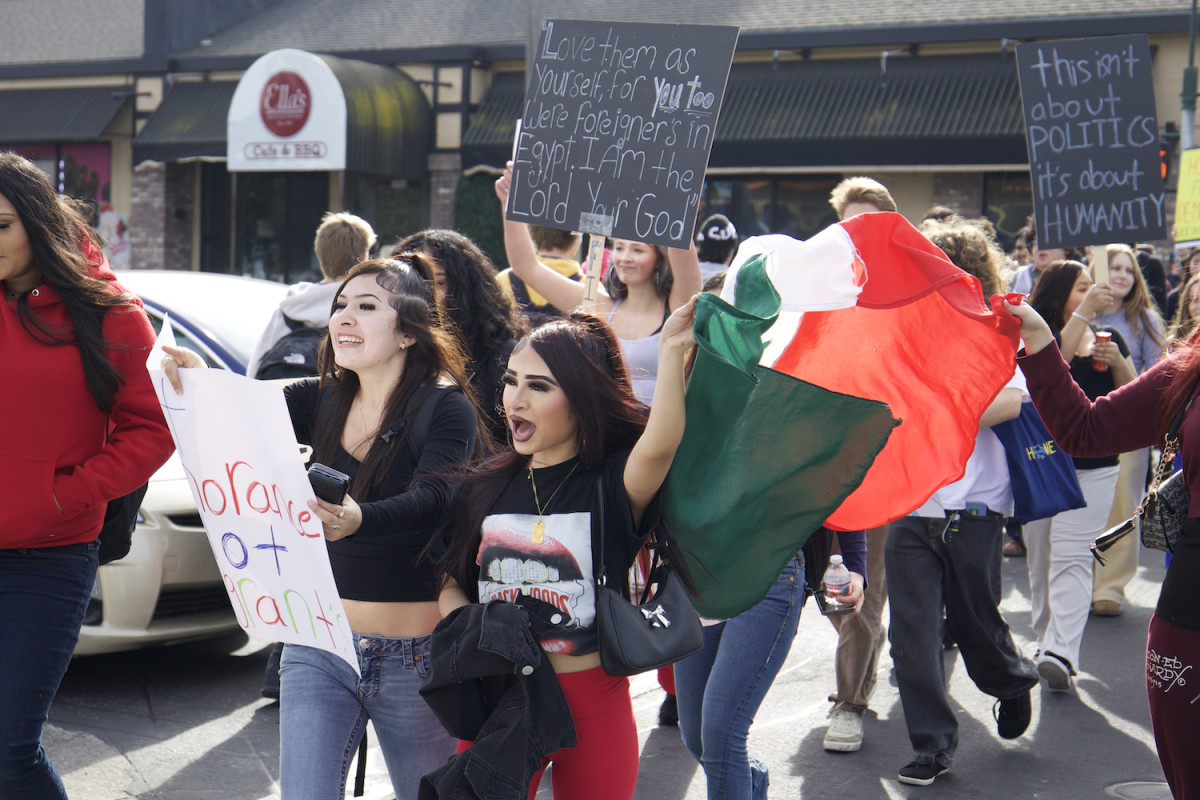
In June, when immigration raids sparked tensions in the city, community action exploded. Grace Zhang, an organizer at Stop LAPD Spying, witnessed this firsthand.
“Kidnappings of our community members began to rise in February, and in June, the first mass raid happened. A lot of folks were enraged. How could this be happening in a city that claims to be a sanctuary?” Zhang said.
Zhang observed how LA mobilized in the wake of the raid, protesting the actions of U.S. Immigration and Customs Enforcement (ICE) by strengthening community defense and awareness networks. For example, they noted that the Community Self Defense Coalition grew from 20 to 80-plus member organizations.
“All protests and riots are a build-up of anger and frustration over the oppression that community members are facing. People power poses a huge threat to how the state functions, so there’s a huge campaign of state repression and violence against protesters, both by the Los Angeles Police Department (LAPD) and by Trump,” Zhang said.
Trump and other Republican politicians argued that the LAPD was not sufficient to address fallout from the protests, leading to Trump federalizing the National Guard — placing them under federal control rather than state control — and ordering them to support law enforcement in LA. Four thousand National Guard members and 700 Marines were deployed.
CalMatters reached out to several California Republicans for their opinions on the deployment.
“What we are seeing now is a situation where the supermajority has limited tools to manage immigration, creating a communication breakdown between local and federal law enforcement, and a vacuum that invites a heavier hand from Washington,” Assemblymember Tom Lackey said in an interview with CalMatters.
Elsewhere, Representative Kevin Kiley spoke with Newsweek about his support for the National Guard being utilized. He echoed the idea that Trump was protecting federal agents and property due to a failure on Newsom’s part.
However, the National Guard’s deployment swiftly met backlash from other sectors of the United States. Democrats such as California Governor Gavin Newsom, LA Mayor Karen Bass, and New Jersey Senator Cory Booker argued that it constituted federal overreach and was unnecessary, and Newsom sued the Trump administration in response.
“Ironically, and perhaps as planned, the presence of troops in LA actually made the situation worse and likely prolonged it,” said Attorney Charles Stone, former Belmont mayor and councilmember.
Many who oppose this use of the troops also compared it to Trump’s inaction during the Jan. 6 attack on the U.S. Capitol.
In Newsom’s case against Trump, Judge Breyer granted an injunction against the deployment of the National Guard for law enforcement purposes, referencing the Posse Comitatus Act. Without a request from Newsom himself, or a veritable rebellion or invasion, Breyer wrote that the National Guard cannot be sent to execute domestic law, including law enforcement.
While many see this decision as positive, some also believe it is largely irrelevant.
“A lot of the militarized repression and violence that we saw on the ground was from the LAPD. Of course, the National Guard had a ginormous role in generating terror in our communities and being an occupying force, and I’m glad that the ruling was what it was, but I unfortunately feel like it won’t ultimately make a difference. Perhaps the Democrats will see it as a win. But, like with anything they do, it’s merely symbolic,” Zhang said.
Sahana Ramkumar, a junior at North Creek High School, also foresees the decision being more symbolic than anything. However, she provided different reasoning.
“It could set a precedent of states more strictly preventing the weaponization of the National Guard, but if Trump decides to escalate the issue, this decision might not mean much. Trump has proven that he is willing to ignore or change whichever laws don’t agree with him specifically,” Ramkumar said.
Trump’s administration contested the decision, appealing it a day after it was given.
“I think President Trump wants to open the Overton window on the deployment of troops domestically, in the hopes that eventually it will become normalized so he can invoke martial law at strategic junctures in the future, like the 2028 election,” Stone said.
He expects the case to work its way up to the Supreme Court, where a legal precedent will be set. This is occurring at the same time as a nationwide escalation in National Guard deployment, with Trump sending troops to Washington, D.C., to fight crime and at least 10 Republican governors inviting the National Guard to support ICE in their states.
“For the first time in generations, I think Americans are going to be forced to take uncomfortable and maybe even dangerous stands to preserve our country. The basic principles that have formed our idea of who we are as a nation are under attack. It’s never been more important for every American to find reliable news sources, read until it hurts, and remain hopeful while staying vigilant,” Stone said.